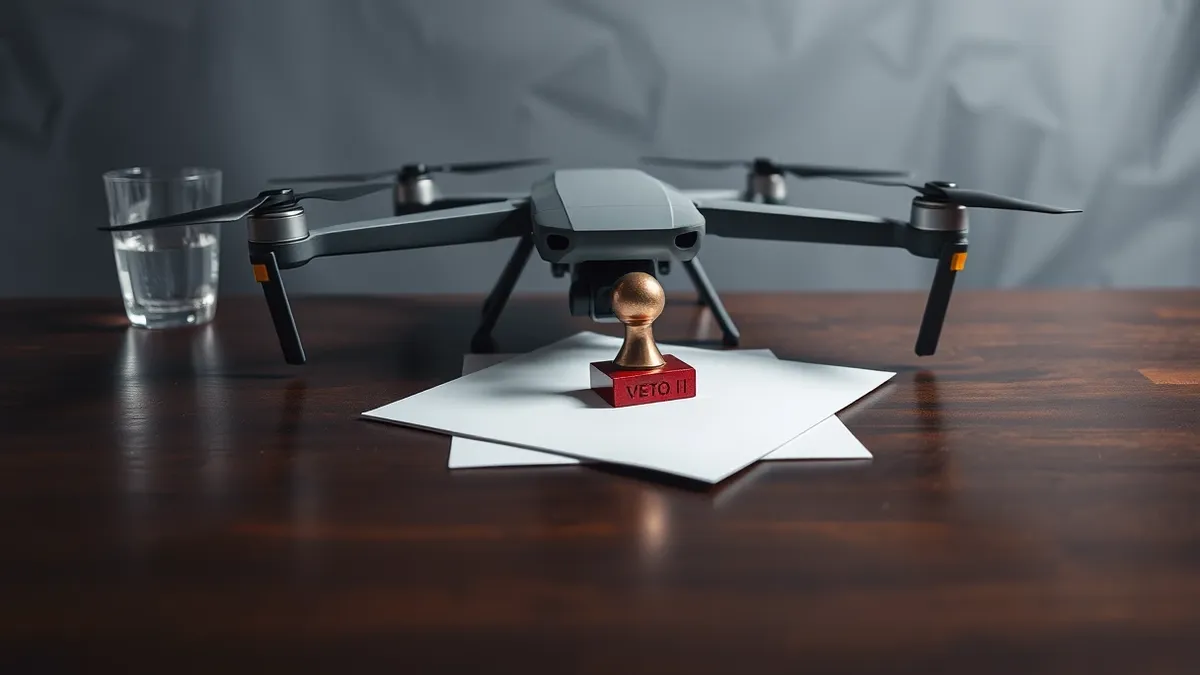
US and Russia Push to Block Binding AI Weapons Rules at UN Review
Nations led by the US and Russia seek to stall legally binding autonomous weapons rules at a key UN conference in Geneva this month.
Key points
- countries attend the seventh review conference on conventional weapons in Geneva from 16 to 20 November.
- Russia, the US and Israel oppose setting a timetable for negotiating a legally binding instrument on autonomous weapons.
- The Future of Life Institute warns that proposals for voluntary measures may serve as smokescreens to avoid regulation.
The extent of resistance to legally binding regulations on autonomous weapons will be evident at a diplomatic retreat beginning on Friday, which precedes the seventh review conference on certain conventional weapons in Geneva.
What was released or claimed
Efforts to address the lack of global oversight for autonomous weapons face setbacks as Russia, the US, and other nations attempt to prevent the adoption of legally binding regulations at this month's UN conference. The review conference is viewed as a pivotal opportunity for the international community to determine if it will support a mandate for negotiating a legally binding agreement on a set schedule.
Who it affects
The discussions involve 128 countries attending the conference from 16 to 20 November.reported Russia, the US, and Israel are among the countries opposing the establishment of a schedule for a legally binding agreement at the review conference.
Evidence: reported
Russia and US seek to block plan for binding rules on autonomous weaponsaifleet-guardian
What is still unknown
It remains unclear whether the opposition will successfully block the mandate to negotiate a legally binding instrument or if states will agree to a defined timetable for such negotiations.
The takeaway
Anna Hehir, who leads military AI governance at the Future of Life Institute, noted that nations are closer than ever to establishing a worldwide pact on AI weapons, having already agreed on components of a draft treaty. She cautioned that certain nations might use rhetoric promoting perpetual talks on non-binding measures as a facade to avoid accountability.
What changes for users
Data science teams should note that the development of autonomous weapons is widely acknowledged to be speeding up, yet regulatory frameworks remain uncertain. The lack of a binding timetable means that governance gaps persist, potentially affecting how AI systems are developed and deployed in warfare contexts.
Why it matters
- The absence of binding rules creates regulatory uncertainty for AI developers working on defense-related technologies.
- Voluntary measures may lack enforcement mechanisms, leaving gaps in accountability for autonomous systems.
- The geopolitical stance of major powers like the US and Russia influences the global trajectory of AI governance.
- Advocacy groups warn that delays in binding agreements could allow unregulated use of autonomous weapons.
Topics: AI governance, autonomous weapons, UN policy, defense tech, regulatory uncertainty
Updated
Ask the article
Local keyword search of this article; no generated answers.Did this article give you the evidence you needed?
Your choice stays on this device. No public tally.Questions readers ask
The seventh review conference on certain conventional weapons is a UN gathering in Geneva, scheduled for November 16–20 with 128 countries in attendance, which is viewed as a critical opportunity to decide whether to establish a mandate for negotiating a legally binding instrument on autonomous weapons within a set timetable.
The seventh review conference on “certain conventional weapons” will take place in Geneva from 16 to 20 November, with 128 countries expected to attend.
Which countries oppose binding rules on autonomous weapons?
Russia, the United States, and Israel are among the countries opposing the establishment of a schedule for a legally binding agreement.
What does the Future of Life Institute warn about voluntary measures?
Anna Hehir warned that proposals for voluntary measures may be smokescreens to keep autonomous weapons unregulated.
Connected stories
Reading receipt
- countries attend the seventh review conference on conventional weapons in Geneva from 16 to 20 November.
- Russia, the US and Israel oppose setting a timetable for negotiating a legally binding instrument on autonomous weapons.
- The Future of Life Institute warns that proposals for voluntary measures may serve as smokescreens to avoid regulation.
Still open: Will the 128 attending countries agree to a timetable for negotiating a legally binding instrument?
Still open: How will the push for voluntary measures impact the development and deployment of autonomous weapons?